The LUCL vegetable garden: A retrospective

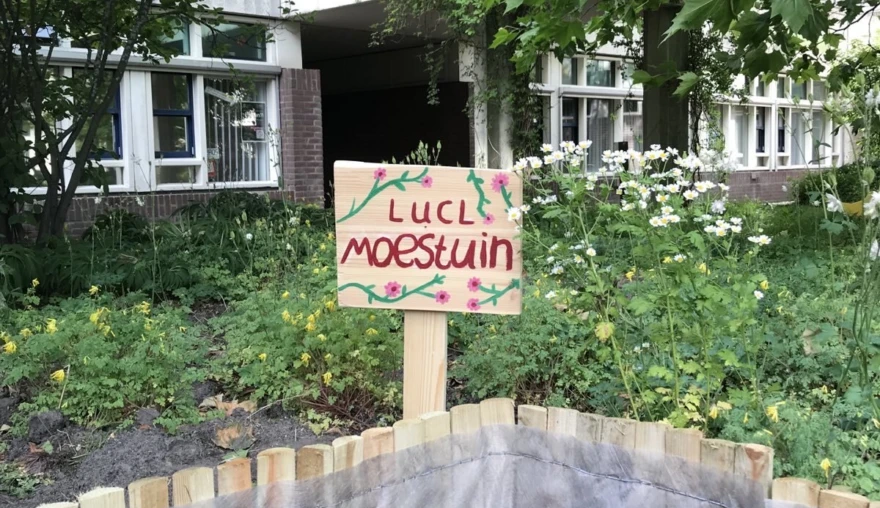
A year ago, we, a group of PhDs at LUCL, had a vision. Perhaps inspired by the Hortus project two years back, when they allotted pieces of land to students and staff to cultivate their own vegetable patches, we wanted to try our hand at it ourselves. And... what a success it's been!
Why a vegetable garden, you might ask? Well, its promise spoke to us; growing our own food, knowing where our dinner comes from... Sustainability is a high priority for our institute and beyond, and the chance to get our hands a little muddy during coffee breaks seemed like a nice bonus. Those were the initial goals of the vegetable garden. However, over the past year, it has brought a lot more than that to the whole LUCL community (and beyond).
How did it start?
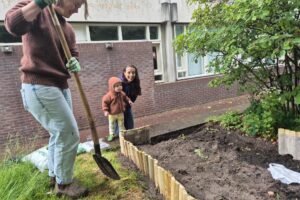
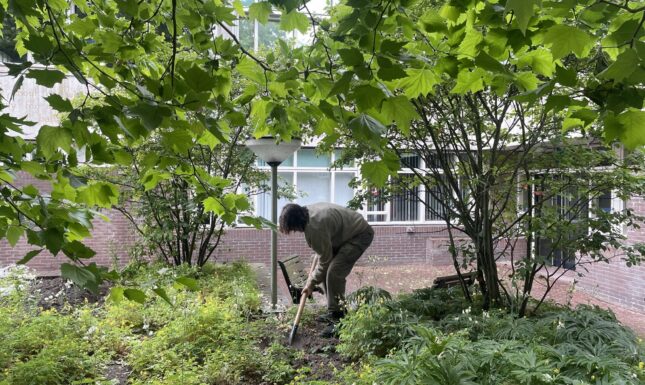
Getting the little allotment of ground was easier than expected. There was a bit of emailing back and forth before we found the right port of call, but once we had a meeting with the UFB, they were more than happy to sign off on the garden. So we got to work, aided by a very helpful groundsman and an almost-as-helpful toddler. There was no hoeing of the ground: we practice so-called no-dig gardening, which aims to disturb the soil beneath as little as possible. It's a sustainable and ecofriendly method of gardening, and fortunately, also a labour-unintensive one.
Harvesting vegetables and much more
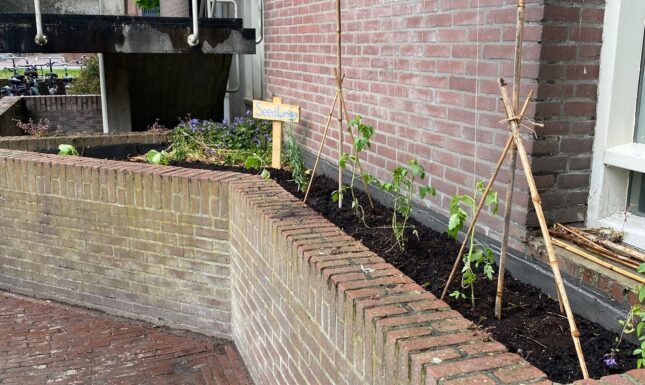
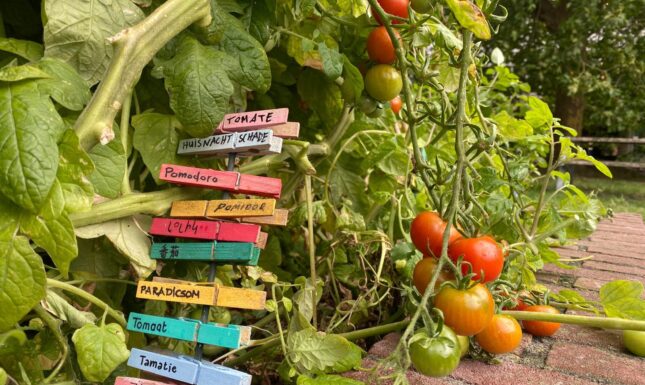
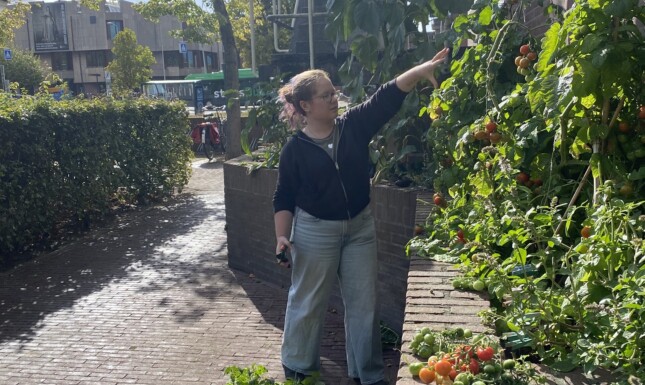
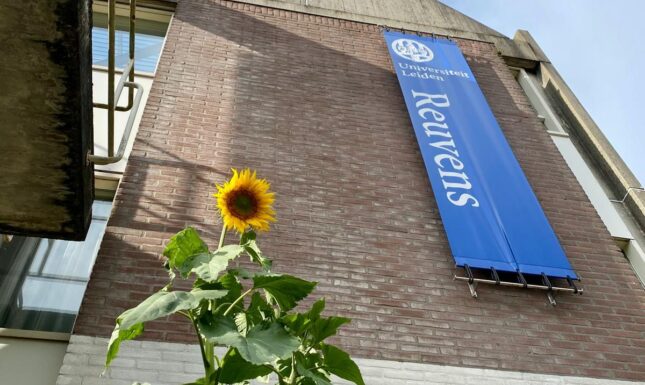
Soon we were off! The tomatoes flourished beyond our wildest imagination, and also beyond the power of the shaky trellis we had built. The sunflowers shot into the air, metres tall, seemingly without ever planning on growing any actual flowers. The aubergines – could have been better.
The real value of this garden, even more than the vegetables it has yielded (or not), has turned out to be its power in bringing together PhDs, staff, students, and even passersby. As it turns out, people love a garden, and they love to strike up a conversation about it. In summer, sitting outside on the picnic benches, not a day would go by without somebody stopping to look at the garden and chat to us about it. People had ideas about how best to cultivate a radish; they wanted to snag a tomato or two; they wanted to know what tatsoi actually was (as do we to this day).
"There had to be a linguistic element to the garden"
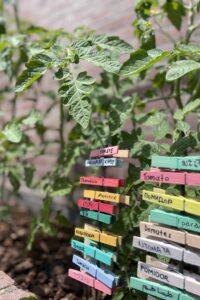
What got passersby just as excited was the linguistic element of the garden. When we checked with LUCL's Management Team before starting the garden, the scientific director of the institute at the time, Sjef Barbiers, attached one condition to his approval: there had to be a linguistic element to the garden.
Fair’s fair; if we were going to call it an LUCL garden, it had better be at least a little bit language-related. Luckily, we landed on a perfect idea: each crop would get a collection of name tags providing its name in a variety of languages. And just to add an interactive element, people could add their own language to the collection, on one of the colourful clothes pegs provided. A huge success! Not only did people get straight to the naming game (Sophia spent multiple weekends painting more clothes pegs to meet demand), but the name tags also added a wonderful colourful touch to the garden.
And now?
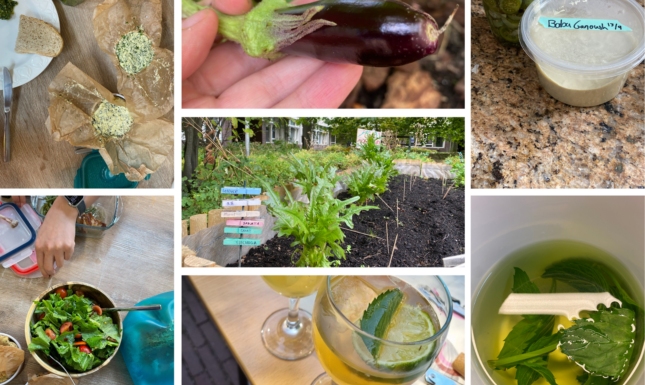
Activity in the garden has now wound down for the year. The sunflowers have been cut down, the tomatoes uprooted, and only the parsley and chives remain over winter (grab a handful if you want!). We ended September with a feast of lettuce, tomato, chive butter, and baba ganoush, which we all harvested ourselves. Now, our little garden slumbers, patiently waiting for next year's planting.
We'd like to thank everyone who has been involved in, or has shown their appreciation of this project over the past year. It has been an incredibly rewarding experience, mainly because of how excited everyone at this institute and beyond has been to see the garden take shape.
Thank you to the people who helped water the crops over the blistering summer; thank you to the people who picked mint for their mint teas, or tomatoes for their lunches. Thank you to the groundsman whose gardening tools we made extensive use of all year. We hope to spread the joys of our little vegetable patch with you again in the new year.
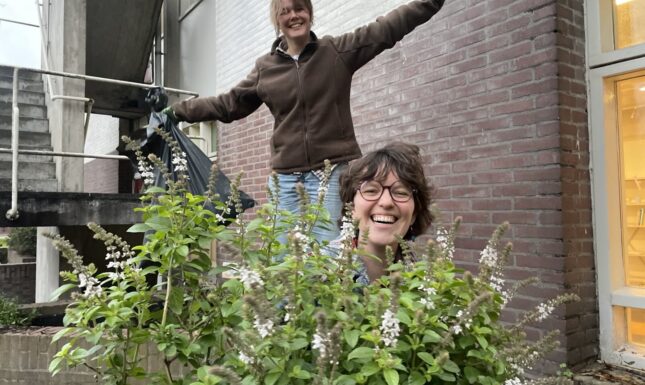
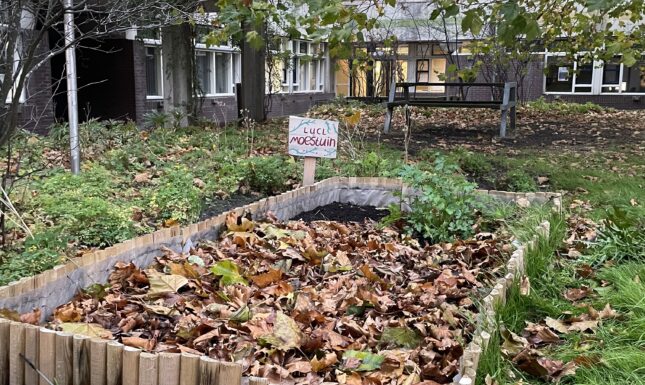
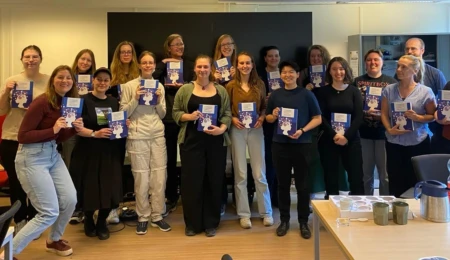
Greenest greetings from the moestuincommittee: Ariëlle Reitsema, Bente De Graeve, Hester Groot, Jesse Wichers Schreur, Sophia Nauta